

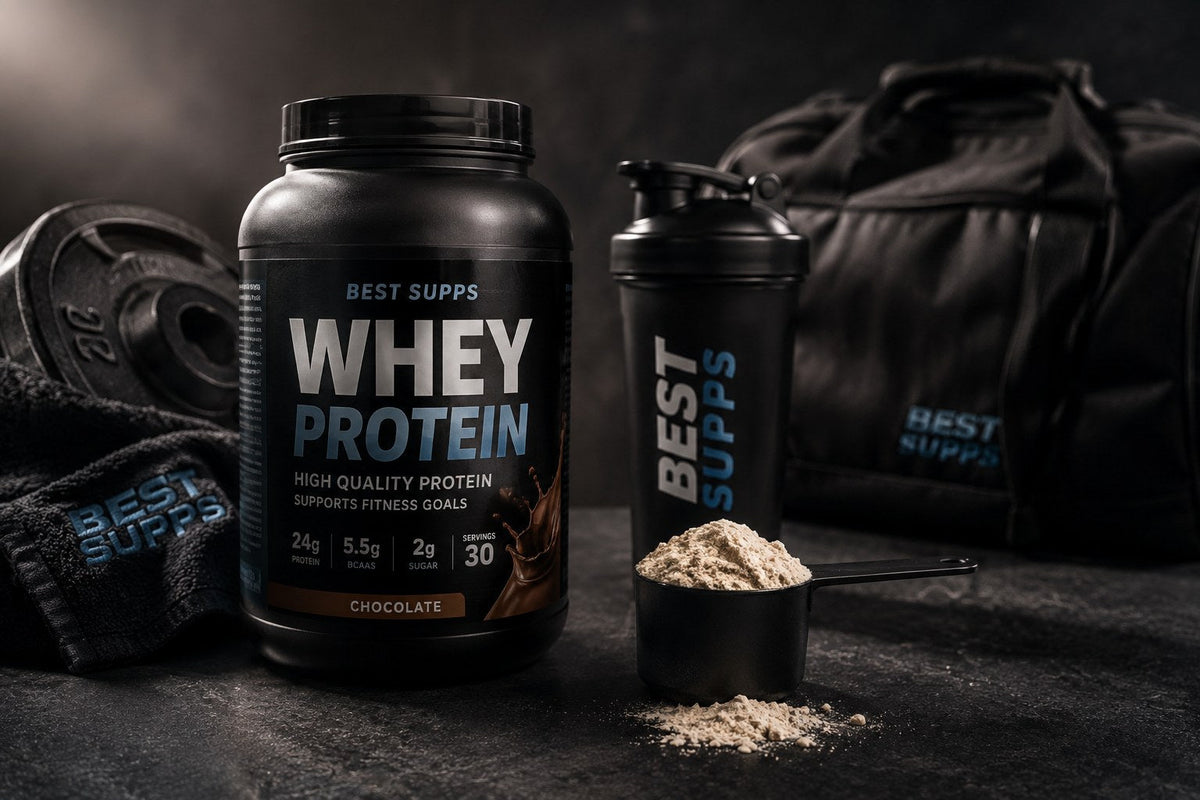
When buying supplements, a question arises that many people don't even consider: Is the product in my shopping cart really genuine? The European supplement market is large, confusing – and not every container comes from a clean source. Counterfeit labels, repackaged goods, or goods intended for another market are more common than one might think. The good news: With a few simple checkpoints, you can recognize reputable goods and reputable dealers. This guide shows you what to look out for.
Why genuine products are an issue at all
Dietary supplements are a mass market with high demand and international supply chains. Where there is a lot of trade, unclear intermediaries also arise: goods change hands several times, are imported through various countries, or resold outside authorized channels. In such grey areas, it is not always possible to trace where a product actually came from, how it was stored, and whether the labeling is correct.
This is relevant for you as a customer because with goods of unclear origin, you cannot be sure whether the contents and label match, whether the information is correct for the EU market, and whether the product has been handled properly. It's not about panic, but about conscious shopping: those who know what to look out for shop more relaxed and make better decisions.
How unclear goods get into circulation at all
To be able to classify the warning signs, it helps to look at how grey areas arise – generally, without naming individual providers. Products are manufactured internationally and traded through many stations. Along this path, goods can end up outside authorized distribution channels: for example, as overstocks, as batches intended for another market, or as items resold multiple times, the origin of which can hardly be traced anymore.
This is problematic for several reasons. Firstly, such goods often lack the correct, market-appropriate labeling. Secondly, storage during transport is not always traceable – especially for products that should be stored cool and dry. Thirdly, an opaque trade route opens the door for counterfeit or repackaged goods that look genuine at first glance. The common denominator is always a lack of transparency about the path from manufacturer to you.
The most important warning signs when buying in an online shop
No single feature is proof in itself – but if several come together, caution is advised. These points help you assess goods and retailers.
Unusually low prices
If a product is significantly cheaper than anywhere else, it's worth taking a second look. Offers well below the RRP or significantly below the usual market price should be scrutinized particularly carefully. Genuine goods have a realistic purchase price; offers well below the usual level can indicate an unclear origin, a very short best-before date, or problematic sources. A good price is not a warning sign – an unrealistically good one is.
Packaging, seals, and labels
Pay attention to the workmanship: holograms or QR codes are only indicators from the perspective of authenticity verification and can be copied. Unclean prints, misplaced or overwritten labels, missing or damaged original seals, and spelling mistakes on the packaging are signs that should make you suspicious – although a single seal is not conclusive evidence. The declaration of raw materials should also be consistently named on the packaging and product page. Brands invest in their packaging – noticeable quality defects do not fit with this.
Batch number and best-before date
Genuine goods bear a batch/lot number and a clearly legible best-before date, usually embossed or cleanly printed. If this information is missing, covered up, or appears to have been subsequently altered, it is a clear warning sign. Reputable retailers also carry out incoming goods inspections, during which exactly this information is checked.
EU labeling and German-language information
Products intended for the European market must be correctly labeled – with complete ingredient and nutritional information, the prescribed mandatory information, a recommended daily intake, and a nutritional table with values per serving and per 100g. If German-language information is completely missing or the labeling appears incomplete, it may be goods that were actually intended for another market. Statements on labels or product pages are not allowed by law to give the impression that dietary supplements cure diseases; permissible formulations rather speak of a contribution, for example with statements such as "contributes to". This does not have to be fake, but it is prescribed for EU sales for a reason.
Manufacturer and retailer information
A reputable shop makes no secret of who is behind it. A complete imprint with a deliverable address, clear contact options, and verifiable information about the company are basic requirements; reputable manufacturers often provide additional information such as analysis certificates on their website, which strengthens trust in manufacturers and retailers. If these are missing or difficult to find, caution is advised.
Origin and supply chain
Where does the retailer source its goods? Especially when buying on large marketplaces, particular caution is advisable, as supply chains are often more difficult to trace there. Reputable suppliers source through authorized wholesale partners instead of opaque intermediaries. Transparency about the supply chain is a strong signal of trust – especially for international brands that are less commonly available in German-speaking countries.
Seller profile and reading reviews with a sense of proportion
Reviews can be an indicator, but should be treated with caution: very few or conspicuously uniform reviews say little. More meaningful than individual reviews is whether the provider acts consistently over a longer period, is clearly named, and can be reached for queries. A retailer who openly answers questions about origin, batch, or labeling is more trustworthy in online trading than one who evades. Reviews remain only one source of information and should not be the sole basis for a purchase decision.
Complete product information
Reputable shops provide complete ingredient and nutritional information for every product – ideally in German; the dosage should also be sensibly chosen and clearly traceable, as should a complete list of ingredients. Reputable shops also clearly assign products to a product group and make the differences transparent for each variant. If this information is missing, incomplete, or only available as a blurry photo of the back, you lack the basis for an informed decision – this applies especially to product groups with micronutrients, vitamins, whey protein, or plant extracts. High-quality products also do without unnecessary additives. Transparent, clean product data with complete ingredient information is a quality feature, not a nice extra – and such information should also be fully available for new products and samples.
Why this is particularly important for dietary supplements
When you buy a supplement, you are not just buying a label, but the expectation that the contents and information match. You want to be able to rely on the composition stated on the container actually being present and that the product has been handled properly. With goods from unclear sources, exactly that is not guaranteed – and unlike many other products, you cannot tell from the outside of a powder or capsule what it really contains.
In addition, there is the economic aspect: whoever believes they are getting a bargain may end up paying for something other than what they think with goods of unclear origin. Genuine goods from a clean source are therefore not a question of luxury, but of reliability – you get exactly the branded product you chose.
Why the source of supply is so crucial
Ultimately, much depends on one question: How does the product reach you? A clean, authorized supply chain is the most effective protection against goods of unclear origin – more effective than any single test feature on the container. Because if the purchase is made through established, authorized partners, the grey area does not even arise in the first place.
Therefore, the best "counterfeit protection" is not the magnifying glass on the label, but the choice of a retailer who has control over and discloses their supply routes. So, pay attention not only to the product, but to the provider behind it.
How Best-Supps ensures genuine products
This is exactly where we come in. Best-Supps was founded so that you never have to worry about one question: whether the product in your hand is genuine. With us, every product is genuine – and that's not a marketing promise, but the result of a consistent supply chain with a clear focus on clean origin, transparent raw materials, and traceable product data:
- Sourcing exclusively from authorized EU wholesale partners – no gray market sources, no detours, no "bargains" of unclear origin.
- Incoming goods inspection with every delivery – we check original labels, batch numbers, and best-before dates, document quality checks, and carry out ongoing controls before a product enters our warehouse.
- Correct EU labeling – goods intended for the European market with complete, German-language information.
- Shipping from Germany – from our warehouse in Augsburg, checked and securely packaged.
In addition, our range is deliberately curated: we focus on selected international brands that stand for tested quality and clean declaration and do without unnecessary additives – especially for sensitive product groups such as micronutrients or plant extracts. Not everything the market offers. You can read more about our supply chain and the company behind it on our About Us page.
Your checklist before buying
To take with you – quickly go through before you order:
- Is the price realistic (not conspicuously far below the usual level)?
- Do the packaging, seal, and label appear clean and undamaged?
- Are the batch number and best-before date present and legible?
- Is there complete, German-language ingredient and nutritional information?
- Does the shop have a complete imprint and clear contact details?
- Is the supply chain traceable (authorized sources)?
The more of these points are clearly answered with yes, the more certain you can be that you are buying genuine goods.
What to do if you are unsure?
If you have already bought a product and have doubts about its authenticity, you can proceed calmly. First, compare the packaging with the official product images of the brand and check the seal, batch, and labeling. In case of justified suspicion, the direct way is best: contact the retailer and specifically ask about the origin and supply chain. If symptoms occur after consumption, stop using it and seek medical advice if necessary. A reputable provider will answer questions transparently. If in doubt, do not consume anything whose authenticity you cannot assess, and keep the packaging and receipt if you want to return the product.
For the future: the simplest protection is to buy from a retailer whose supply chain you can trace from the outset. Then the question of authenticity does not even arise.
Frequently Asked Questions
Are cheap goods automatically counterfeit?
No. A good price alone is not a warning sign – promotions and fair prices are available from reputable retailers. It only becomes critical if the price is unrealistically low and other points (missing labeling, unclear origin) are added.
How can I recognize a reputable shop most quickly?
By transparency: complete imprint, clear contact options, traceable information on origin and supply chain, and complete product information. Those who disclose where the goods come from usually have nothing to hide.
What about "imported" goods for another market?
Goods that are actually intended for another market do not have to be counterfeit – but they often lack the German-language information prescribed for EU sales. For the European market, the labeling should be complete and correct; the Health Claims Regulation governs health-related statements on food supplements.
Can I check genuine goods myself?
Partially yes – using the mentioned features (seal, batch, best-before date, labeling). However, the biggest difference is made by choosing a retailer with a clean, authorized supply chain, because the check already happens there before the sale.
Are international brands riskier?
Not fundamentally. International premium brands are completely harmless as long as they are sourced through authorized channels and correctly labeled for the EU market. The decisive factor is not the origin of the brand, but the way in which the specific product reaches you.
What does an incoming goods inspection at the retailer do?
It shifts the inspection to where it belongs – to the specialist retailer, before the goods are even sold. If original labels, batch numbers, and best-before dates are checked with every delivery, the risk of problematic goods slipping through to you is significantly reduced. The inspection also includes the plausibility of product data such as the dosage – for example, because creatine only develops its known effect from 3g daily.
Conclusion
Recognizing genuine goods is not rocket science: realistic price, clean packaging, complete labeling, batch number and best-before date, a transparent shop with a traceable supply chain. The strongest protection is the source of supply itself – a retailer who buys through authorized partners and discloses this. This is exactly what Best-Supps is for: so that the question of authenticity doesn't even arise for you. You can find out more on our About Us page, and further training and nutrition knowledge in the Best-Supps Magazine.


