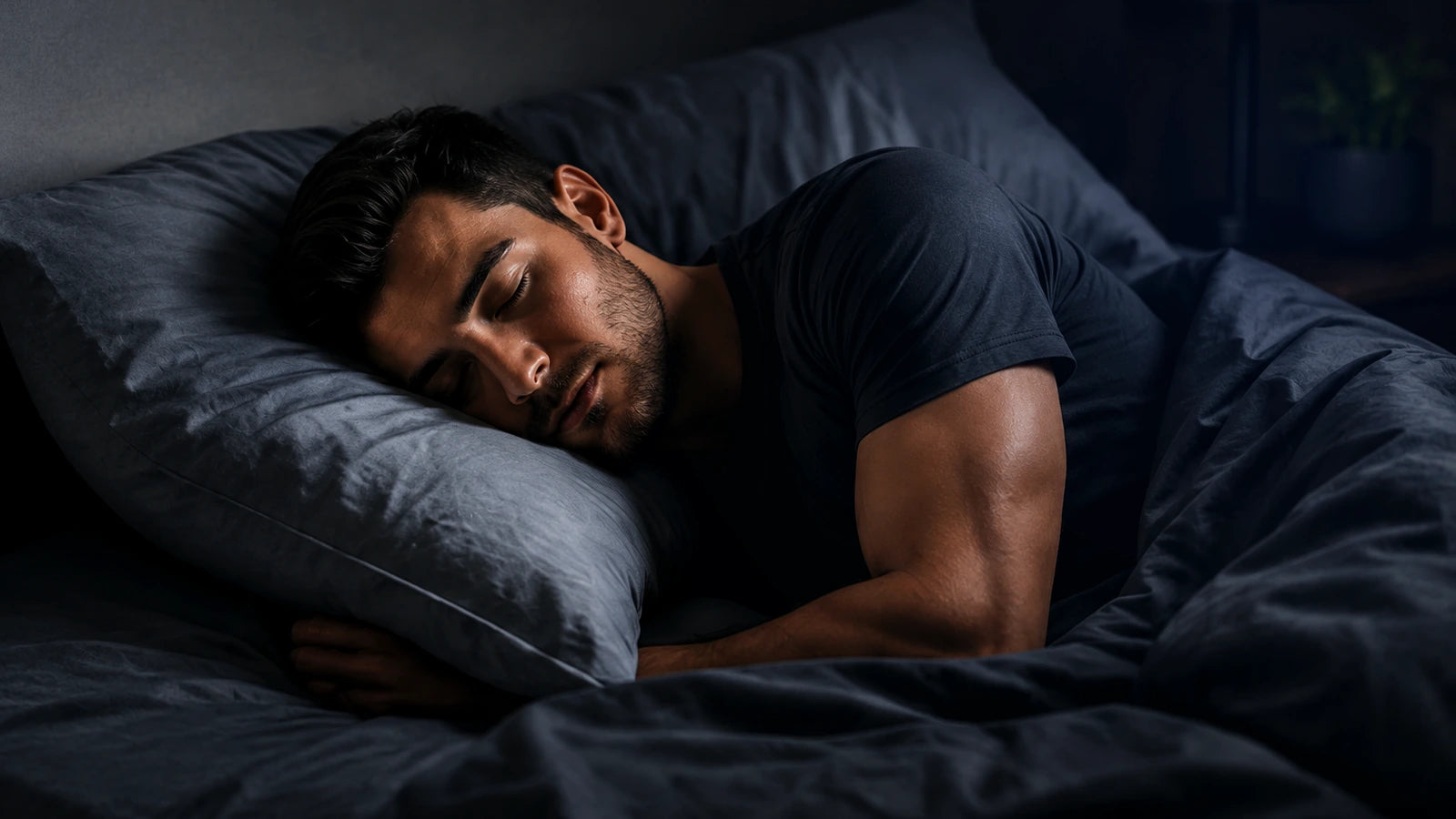
Sleep is the most underestimated performance booster in training. If you want to sleep better, you primarily improve your sleep quality: with fixed sleep times, a quiet and dark environment, and consciously avoiding late caffeine – and precisely this improves recovery, performance, and training success.
Anyone who works hard, eats clean, and still isn't making progress should look here first, because a large part of physical and mental regeneration happens at night. Without it, even good training and nutrition plans will hardly yield any progress. This article is aimed at physically active people and trainers who want to specifically improve their sleep, and briefly and practically shows what matters: sleep hygiene, caffeine, the right nutrition in the evening, dealing with irregular daily rhythms, useful supplements, and stress reduction strategies before bedtime. The good news: even simple changes in habits can make a big difference here – without any miracle cures.
Why Sleep Matters for Training and Performance
Important recovery processes take place during sleep: the body regenerates, the nervous system recovers, and you process the day's stress. Too little or poor sleep quickly becomes noticeable – lower strength performance, poorer concentration, less motivation, and often more cravings because fatigue disrupts appetite regulation. Over weeks, this can slow down any training plan, no matter how good it is.
Conversely: those who improve their sleep often also improve their training results – without a single additional session. Good sleep is therefore one of the few "free" progress levers available to you. It costs no extra time at the gym, no money for supplements, and no extra discipline with nutrition – just the willingness to adjust a few habits in the evening.
For most adults, the sensible range is seven to nine hours per night, although sleep duration can vary slightly individually. Just as important as duration is quality and regularity – consistently quiet sleep at fixed times brings more than eight restless hours with a changing rhythm and is a better basis for restful sleep.
What Happens at Night: Sleep Phases and Regeneration
Sleep is not a uniform state, but occurs in cycles of around 90 minutes each, which repeat several times per night. Each cycle goes through lighter and deeper phases, as well as dream sleep (REM). Especially the deep sleep phases, which occur more frequently in the first half of the night, are considered important for physical recovery. REM sleep towards morning is more strongly associated with mental processing and also supports the recovery of mind and mental balance.
For you as an athlete, the practical message is crucial: it's not just about "somehow enough hours," but about undisturbed, complete cycles. Those who regularly go to bed too late and have to get up early tend to shorten the phases that are important for recovery and mental freshness. This is precisely why short nights still have an effect even if you think you "can cope" – the lack of recovery quietly accumulates in the background.
Sleep Hygiene: The Foundation That Really Works
"Sleep hygiene" sounds technical, but it simply refers to the habits and conditions that promote good sleep – this also includes a suitable sleep environment. It is the most effective and at the same time cheapest lever – long before any supplement comes into play.
Fixed times: Go to bed at roughly the same time and get up at the same time – even on weekends. Fixed bedtimes help your body stay in rhythm.
Dark and cool: A darkened, cool room supports falling asleep and sleeping through the night; the ideal bedroom temperature is between 16 and 18 degrees Celsius. A tidy bedroom can also promote relaxation before sleep.
Wind down screens: Bright light and stimulating content shortly before sleep keep you awake. Consciously plan the last hour to be calmer – as simple tips for habits that contribute to healthy sleep.
Bed is for sleeping: Those who work in bed or scroll for hours train their body to stay awake.
Exercise yes, late intensity no: Regular training improves sleep – but a very intense workout shortly before bedtime can have a lingering effect on some people.
Caffeine Timing: The Most Common Sleep Thief
Caffeine is an integral part of everyday life for many athletes – from coffee to pre-workout. The problem is rarely the amount, but the timing. Caffeine remains active for a long time: its half-life for many people is around five hours, meaning a good portion is still active hours later. This means it can still be relevant hours before bedtime. So, an espresso at 5 PM can definitely disturb sleep at midnight, even if you no longer feel "awake."
Practical guideline: wherever possible, consume caffeinated beverages and boosters in the first half of the day and avoid them in the late afternoon and evening. If you train in the evening, it's better to opt for a caffeine-free pre-workout to get pump and focus without sleep disturbance – because caffeine is just one of several factors that can disrupt sleep.
Supplements for Sleep – Objectively Classified
Dietary supplements are not a substitute for good sleep habits, but at best a complement. Two nutrients are particularly frequently mentioned in this context – here's an honest, legally correct classification.
Magnesium
Magnesium is popular among athletes and involved in many processes in the body; many people also look for natural sleep aids. Approved claims include: Magnesium contributes to normal muscle function, Magnesium contributes to the reduction of tiredness and fatigue, and Magnesium contributes to the normal functioning of the nervous system. Important for honesty: there is no officially approved claim specifically for "better sleep" for magnesium – you should view such promises critically. If you want to supplement magnesium, you can find it in the minerals category; the appropriate amount is stated on the product.
Melatonin
A health claim has been approved for melatonin: Melatonin helps reduce the time it takes to fall asleep. This claim applies under the condition that 1 mg is consumed shortly before bedtime. Please note the rules in Germany and Austria: depending on the dosage and presentation, melatonin is subject to special regulations here, and higher-dosed products quickly fall into the pharmaceutical category. Therefore, only use melatonin according to the package instructions, do not exceed the recommended amount, and clarify its use with a doctor if you have any uncertainties, pre-existing conditions, or are taking medication.
Nutrition and Timing in the Evening
Eating habits in the evening also influence how well you unwind. Very late, very rich meals often sit heavy in many people's stomachs and can make it harder to fall asleep. However, for some, an overly empty stomach is just as disruptive. A sensible middle ground is a light dinner a few hours before bedtime; if you're still hungry in the evening, opt for something light, as other small options are often better tolerated than heavy meals. For athletes who train late, a protein-rich, not too heavy meal after a workout can support regeneration without disturbing sleep.
Alcohol also deserves an honest look: while it often makes you fall asleep faster, it noticeably worsens sleep quality in the second half of the night. If you value recovery, keep your alcohol intake low in the evening.
Regularity Trumps Perfection
Probably the most underestimated factor for good sleep is your sleep rhythm. Your body relies on an internal clock that is closely linked to the sleep-wake cycle, and it thrives on reliability. Those who get up early during the week and sleep for hours longer on weekends disrupt this rhythm – an effect that feels like a mini jet lag. Fixed times are therefore more effective than any single "perfect" night. You don't have to be dogmatic: one to two hours of leeway on weekends is fine, as long as the basic rhythm remains stable and your sleep behavior is generally reliable.
And don't worry if one night goes badly – that's part of it and won't ruin your training progress. The pattern over weeks is what matters, not the single exception.
Shift Work, Early Training Times, and Irregular Daily Routines
Not everyone has a 9-to-5 rhythm. Those who work shifts, train early, or travel frequently struggle with a constantly shifting schedule – and there's rarely room for the perfect night. This doesn't mean you're out of luck; it means the basics become even more important. Irregular work and changing hours, in particular, can noticeably impair performance.
A few approaches are particularly helpful in such situations: Keep your wake-up and bedtime as consistent as your schedule allows, instead of changing them daily. Use light consciously – daylight in the morning helps set your internal clock, dimmed light in the evening helps you wind down. And, if your rhythm is already stressed, try not to schedule hard training directly before your planned bedtime. If you train very early, conversely, consistently plan enough time for sleep in the evening, rather than shortening the night from both ends.
Perfection is not the goal here – damage control and consistency within what is possible are. Even small improvements in regularity often make the biggest difference in an irregular daily routine.
A Simple Evening Routine
You don't have to change everything at once. A realistic starting point: a fixed bedtime to improve sleep quality, no caffeine from late afternoon onwards, the last hour without bright screens, and a dark, cool room. These four habits cost nothing and, for most people, noticeably help with sleep disturbances more than any supplement. If a nutrient is then added, it does so on a solid foundation – not as a replacement for it.
Stress, Racing Thoughts, and Winding Down
Even if the room, times, and caffeine are right, one thing keeps many people awake: their mind. A merry-go-round of to-dos, worries, and reviewing the day is a common cause of sleep disturbances and persistent nightly problems – and it cannot be solved with room temperature alone. Here, it helps to consciously manage the transition instead of jumping directly from a full-throttle day into bed. During chronic stress, stress hormones like cortisol can remain elevated.
Simple rituals have proven effective: briefly writing down the most important points for tomorrow so your mind can let them go; a few minutes of quiet reading instead of scrolling through feeds; or conscious, slow breathing for relaxation to physically wind down and make it easier to fall asleep. None of this is high-tech, and that's precisely the point – the body responds to reliable signals that it's time to rest. If you find it hard to switch off in the evening, you should take this mental aspect as seriously as the external conditions. Sleep deprivation and stress reinforce each other.
What We Focus On at Best Supps
Those who train in the evening don't have to sacrifice focus: many of our international brands offer caffeine-free pre-workouts that allow for pump and concentration without disturbing sleep. For magnesium and other minerals, we stock original products from reputable manufacturers in the USA, UK, and Canada with transparent declarations of form and amount per serving — so you can understand the dosage and don't have to guess.
Related categories: Caffeine-free pre-workout · Minerals · Recovery
Frequently Asked Questions
How much sleep do I really need as an athlete?
For most adults, seven to nine hours is a sensible range; the need is different for children. Individual needs vary, but those who consistently sleep significantly less will sooner or later notice it in their performance, concentration, and recovery. As a rule of thumb: you should wake up reasonably rested without an alarm clock.
Is a nap useful?
A short power nap of about 20 minutes can promote alertness during the day without disturbing nighttime sleep. Longer or very late naps, on the other hand, make it harder for some people to fall asleep in the evening – here, you just have to experiment to find what works for you.
Does exercise help with poor sleep?
Regular physical activity has a positive effect on sleep for many people. Only very intense sessions late in the evening can have a lingering effect on some – in that case, it's worth planning hard training earlier in the day.
Should I completely avoid caffeine in the evening?
Not necessarily completely, but consume it as early in the day as possible. Because caffeine has a long-lasting effect, the afternoon and evening are the critical zone. Those who are sensitive set the limit earlier – often in the early afternoon, so that sleep quality and reaction time do not suffer.
Conclusion
Better sleep means better recovery – and better recovery ultimately means better performance and long-term health support. The biggest lever is unspectacular: regular times, a quiet, dark environment, and conscious caffeine management. Supplements can complement, but not replace, habits. Persistent difficulty falling asleep or staying asleep is common: chronic sleep deprivation can increase the risk of cardiovascular diseases, and if sleep apnea is suspected, your GP is the first point of contact for clarification. Taking sleep seriously often yields more from your training than any extra set in the gym.